

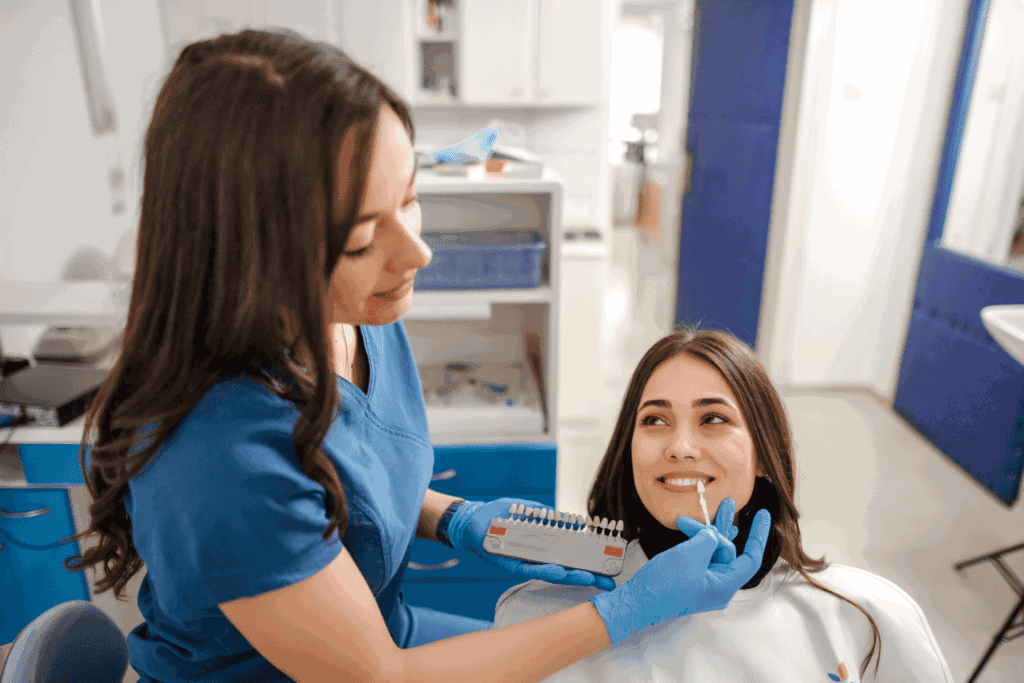
The Foundation of Dental Stability
The periodontal ligament represents one of the most remarkable yet often overlooked structures in oral anatomy and is one that your dentist Port Macquarie will examine during a check-up. This thin layer of connective tissue, measuring merely 0.15 to 0.38 millimetres in width, serves as the crucial interface between tooth roots and the surrounding alveolar bone. Despite its modest dimensions, this tissue performs an array of vital functions that directly impact tooth stability, movement, and the way biting forces are managed throughout the jaw.
When examining dental health from a comprehensive perspective, understanding the relationship between periodontal ligament integrity and tooth function becomes paramount. This connective tissue doesn’t simply anchor teeth in place; it acts as a sophisticated shock absorber, a sensory organ, and a dynamic tissue that constantly adapts to the mechanical demands placed upon it. The health of this ligament fundamentally determines how teeth respond to everyday activities such as chewing, speaking, and even unconscious habits like teeth grinding.
The Structural Composition of the Periodontal Ligament
The periodontal ligament comprises a complex network of collagen fibres, blood vessels, nerve endings, and cellular components. These fibres are arranged in distinct bundles that run in various directions, creating a hammock-like support system around each tooth root. The primary functions of the periodontal ligament include attachment, sensory perception, and tissue maintenance.
The principal fibre groups within this ligament include alveolar crest fibres, horizontal fibres, oblique fibres, and apical fibres. Each group serves a specific mechanical purpose, working in concert to distribute forces throughout the tooth-bone interface. The oblique fibres, which constitute the majority of the ligament, are particularly crucial for managing vertical biting forces, directing them along the long axis of the tooth where the bone is best equipped to handle the stress.
How Ligament Health Affects Tooth Mobility
Tooth mobility exists on a spectrum, with a small degree of natural movement being entirely normal and healthy. This physiological mobility, typically measuring between 0.1 and 0.2 millimetres, allows teeth to absorb and dissipate the considerable forces generated during mastication. A dental professionals encounter would explain that this slight movement is actually a sign of a healthy, functioning periodontal ligament rather than a cause for concern.
The Progression from Health to Pathological Movement
When periodontal disease or trauma compromises the ligament, tooth mobility increases beyond normal parameters. The inflammation associated with periodontal conditions causes the breakdown of collagen fibres and can lead to widening of the ligament space. This degradation reduces the tissue’s ability to maintain tooth position, resulting in increased movement that patients may notice when eating or even when touching their teeth with their tongue.
Research has demonstrated that periodontal ligament cellular responses to mechanical stress play a crucial role in tissue adaptation and remodelling. The cells within this ligament, particularly fibroblasts and osteoblasts, respond to mechanical loading by either strengthening the attachment apparatus or, in cases of excessive or chronic inflammation, contributing to tissue breakdown.
Bite Force Distribution and Ligament Function
The periodontal ligament’s role in distributing bite forces cannot be overstated. During normal chewing, forces ranging from 70 to 150 Newtons are generated on posterior teeth, whilst anterior teeth experience considerably less. The ligament’s viscoelastic properties allow it to deform under load, spreading these forces across a broader surface area of the alveolar bone and preventing localised stress concentrations that could cause damage.
When ligament health deteriorates, this force distribution becomes compromised. Teeth with damaged periodontal support experience altered loading patterns, which can create a cascading problem where remaining healthy teeth must bear disproportionate forces. Studies examining biomechanical properties of periodontal tissues have revealed how this redistribution can accelerate further periodontal breakdown in adjacent teeth.
Maintaining Periodontal Ligament Vitality
Preserving the health of the periodontal ligament requires attention to several factors. Proper oral hygiene remains fundamental, as bacterial accumulation at the gum line triggers the inflammatory cascade that damages ligament fibres. Regular professional dental care allows for early detection of periodontal problems before significant ligament damage occurs.
Additionally, managing occlusal forces through appropriate bite alignment and addressing habits such as bruxism helps prevent excessive mechanical stress on the ligament. The tissue possesses remarkable regenerative capacity when conditions are favourable, but chronic inflammation or persistent trauma can overwhelm its ability to repair itself, leading to progressive attachment loss and increased tooth mobility that ultimately compromises oral function and comfort.